Keepsakes of the Heart — Then & Now

Honouring love, loss, and legacy through time

Throughout history, people have found meaningful ways to remember their loved ones. One of the most enduring and intimate forms of remembrance has been mourning and keepsake jewellery — a tradition that traces back centuries and still holds deep emotional value today.

Early Origins: From Ashes to Adornment

The earliest known examples of keepsake jewellery date back to ancient civilisations. The Romans, for instance, were known to enshrine a small portion of their loved one’s cremains in tiny urns or amulets, which could be worn or carried.

In medieval Europe, memento mori jewellery — Latin for “remember that you must die” — became a powerful symbol of mortality and the fragility of life. These early pieces weren’t just about grieving the dead; they reminded the living to live with purpose and humility.

The History of Cremation, Keepsake, and Mourning Jewellery

Roman Cinerary Urn (1st century CE)

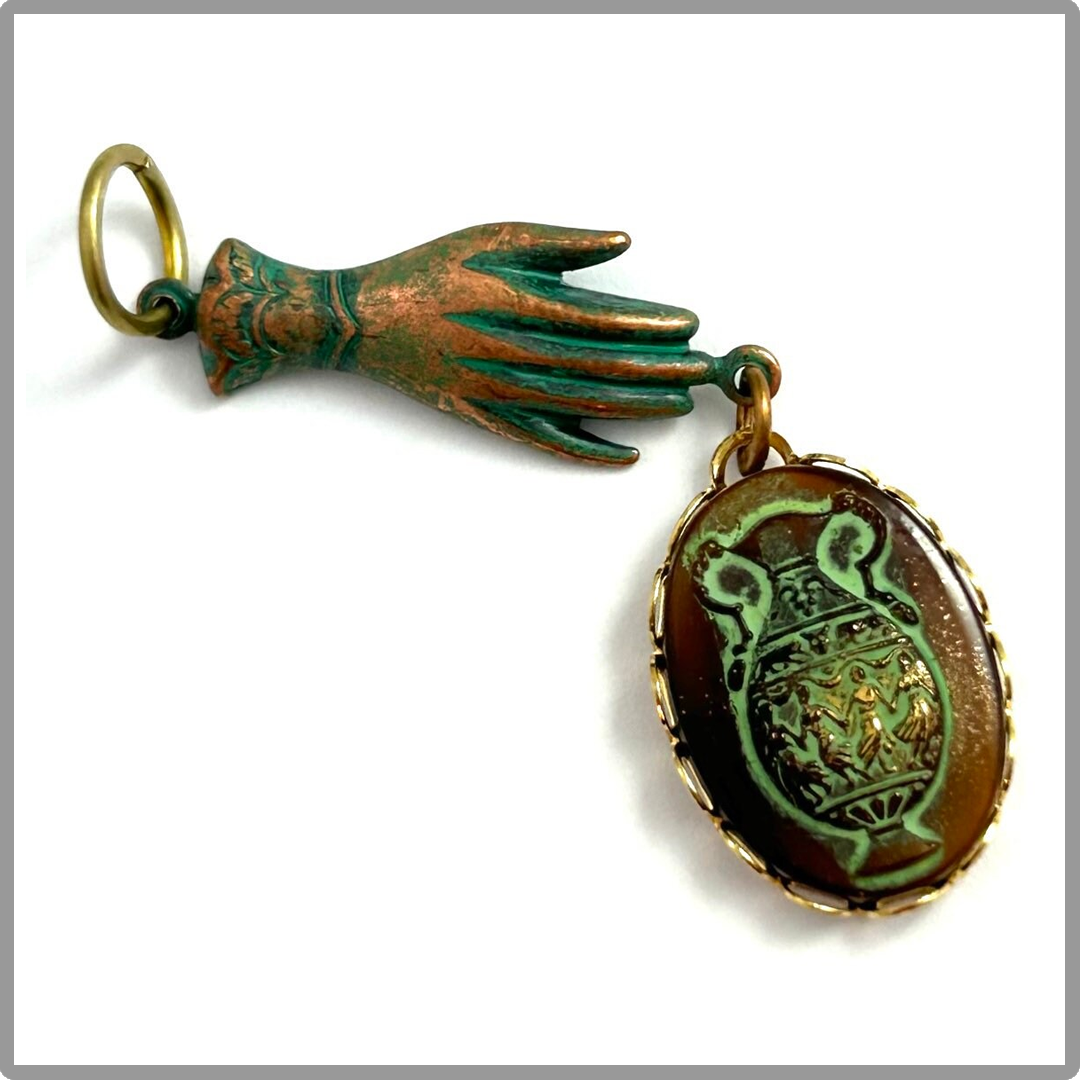
Small amphora‑style pendant inspired by early Roman funerary urns — symbolic of ancient cremation customs and portable remembrance.

The History of Cremation, Keepsake, and Mourning Jewellery

Roman-style urn pendant

Another amphora‑form pendant echoing Roman‐era ash‑container designs, highlighting how cremation symbolism persisted in later wearable art. Description: A marble funerary urn excavated near Anagni, Italy, used to hold cremated remains. Though full-sized, examples like this offer accurate references for the shapes and symbolism later miniaturized into pendants.
The Golden Age: Victorian Mourning Jewellery

In the 19th century, particularly after Prince Albert’s death in 1861, mourning jewellery became deeply symbolic—jet black lockets, brooches and rings held braids of hair woven into floral motifs or tree designs. These weren’t merely ornaments—they were intimate relics, worn to keep a part of the departed close. Mourning rings engraved with names and death dates became tokens of remembrance, blending personal grief with public ritual. Over time, mass production made them accessible beyond aristocracy, though by the early 1900s, rising hygiene concerns and photography led to their decline .

Victorian mourning pieces were rich with symbolism:

  • Hairwork: Locks of the deceased’s hair were woven into intricate designs and set into brooches, lockets, or rings.

  • Jet stones: Carved from fossilised wood, black jet became the preferred mourning gemstone.

  • Enamelled inscriptions: Words like In Memory Of were etched in gold or white enamel.

  • Miniature portraits or names: Often hidden behind lockets or beneath glass domes.

This era wasn’t just about grief — it was also about status. Mourning customs were elaborate, and families often had multiple mourning stages with appropriate jewellery to match.

The History of Cremation, Keepsake, and Mourning Jewellery

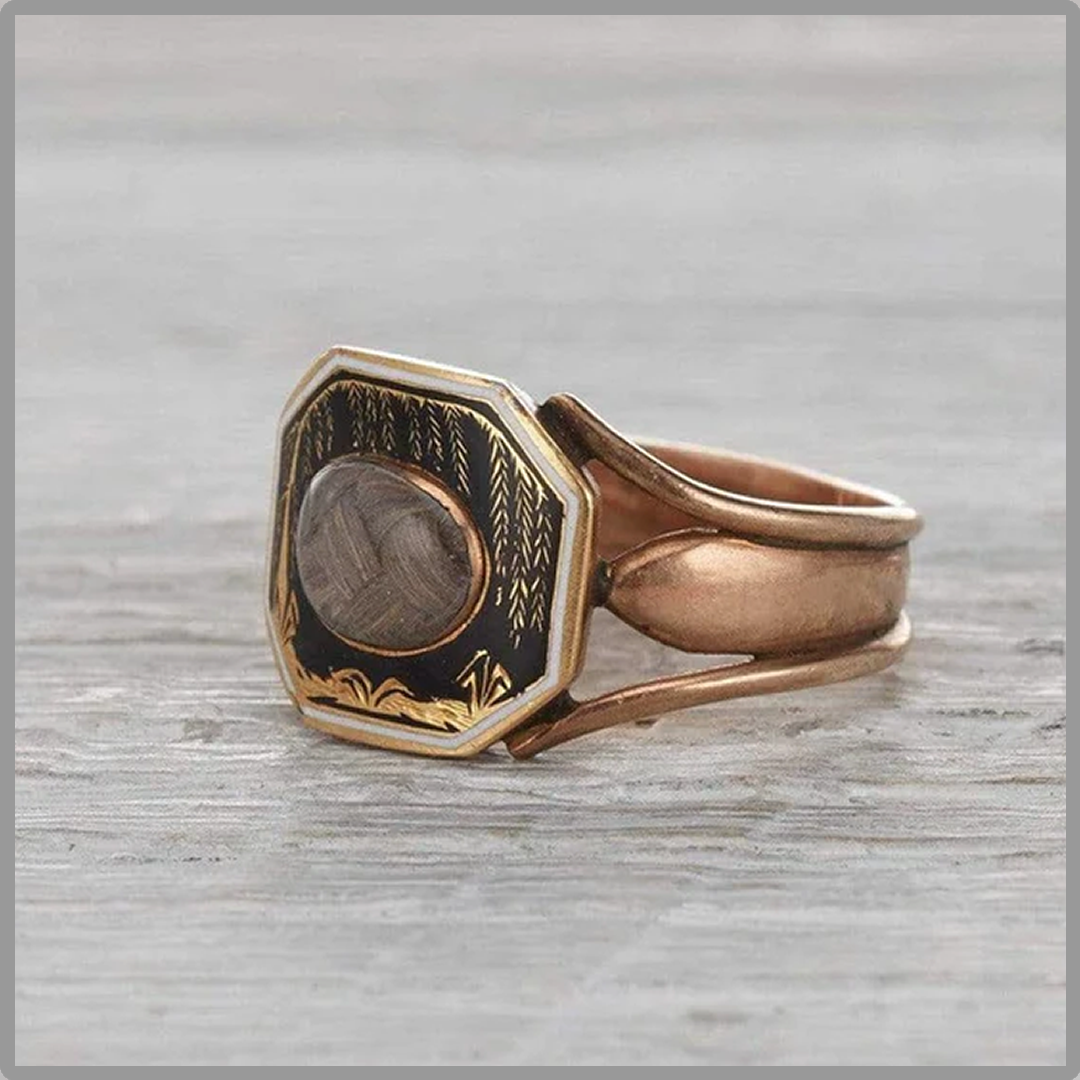
Victorian Mourning Ring with Braided Hair

Mid-19th-century mourning ring containing a woven lock of hair and engraved inscription—offered in the Met’s public domain catalog.
The History of Cremation, Keepsake, and Mourning Jewellery

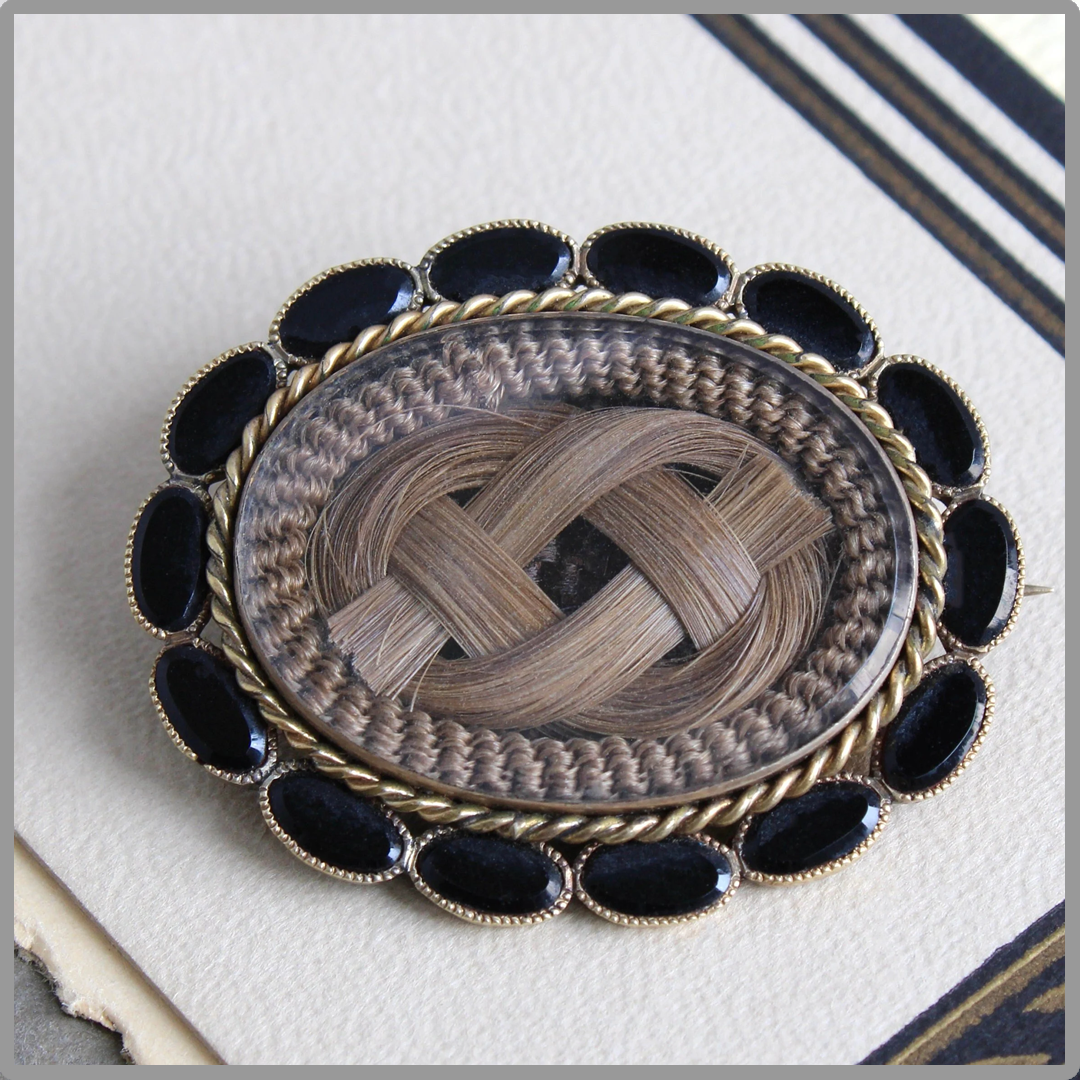
Victorian Jet Hairwork Brooch

19th-century jet brooch with intricate hairwork at the center—derived from Pitt Rivers Museum’s public domain collection.
Symbolism and Sentiment

Mourning and keepsake jewellery was never simply decorative — it was deeply symbolic.

  • Weeping willows, urns, and clasped hands represented sorrow and eternal connection.

  • Forget-me-nots and violets symbolised remembrance and modesty.

  • Black enamel or onyx stood for mourning, while white enamel was used to mourn children or unmarried women.

These symbols helped mourners communicate emotions that words couldn’t. Wearing such jewellery provided comfort, connection, and a visible expression of loss.

The History of Cremation, Keepsake, and Mourning Jewellery

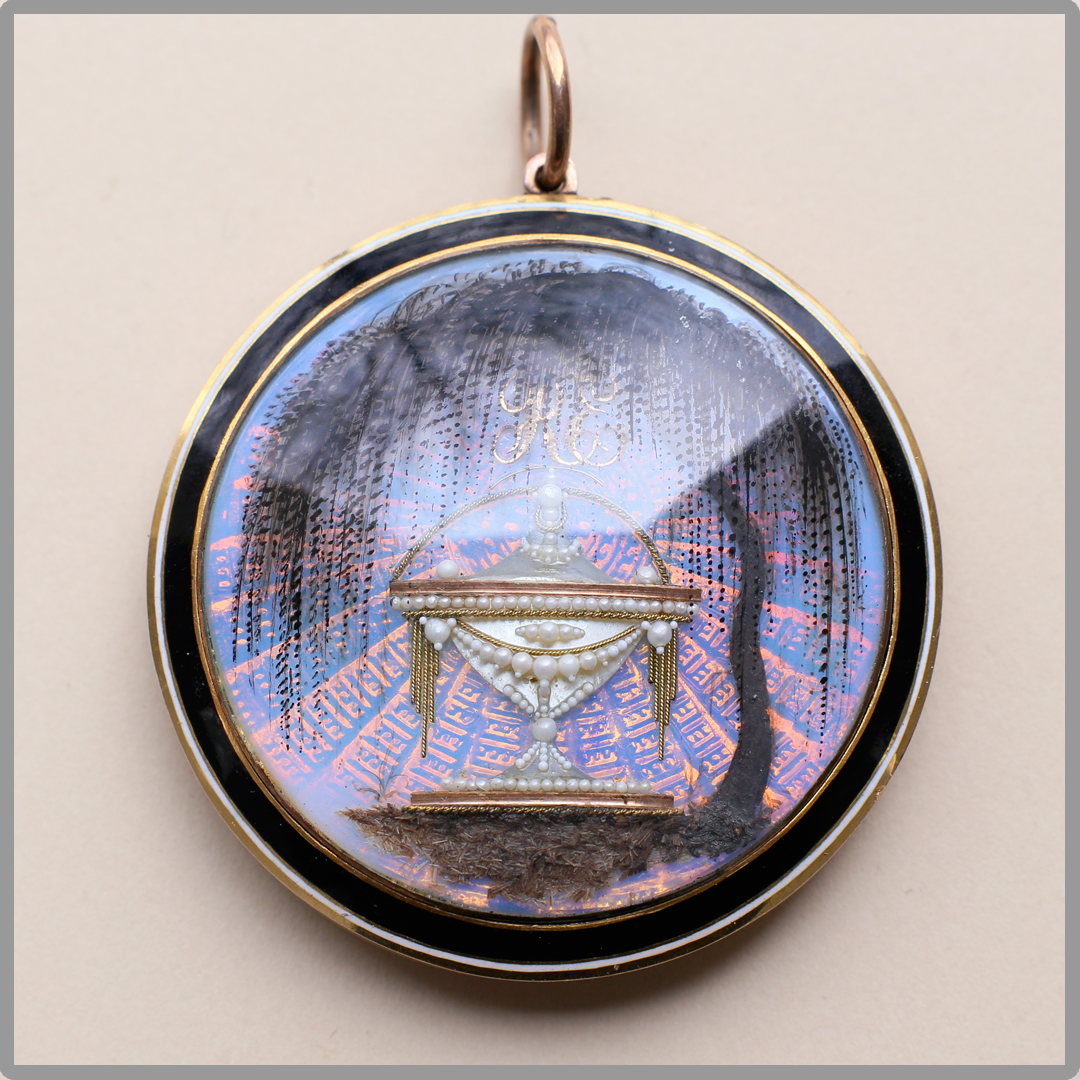
Georgian Mourning Pendant (Early 19th Century)

A beautifully preserved example of Georgian mourning jewellery featuring a hand-painted portrait miniature, weeping willow, and urn—symbols of remembrance and eternal love. Set beneath foiled opaline glass to enhance its luminous depth.

20th Century to Now: Changing Traditions

As mourning practices became more private in the 20th century, the popularity of mourning jewellery declined. The World Wars, changes in social norms, and evolving views on death transformed grief into something more personal and less publicly displayed.

But the need to hold on never disappeared. In recent decades, a quiet revival has taken place — not in the strict, symbolic ways of the past, but in deeply personal, handcrafted keepsakes.

Where Are We Headed? The Future of Keepsake Jewellery

Today, artisans like myself honour this long tradition in new ways. Cremation jewellery now incorporates modern materials like resin, sterling silver, and gold — preserving ashes, hair, breastmilk, or fabric inside wearable art.

There’s a gentle shift happening: people are reclaiming grief. Rather than hiding it away, they’re choosing to honour, remember, and carry those they’ve lost.

What was once elaborate and formal is now quiet and bespoke — tailored to the unique story of each individual.

Final Thoughts: Jewellery That Holds Meaning

Mourning and keepsake jewellery have always had one purpose — to hold memory in tangible form. Whether it’s a braided lock of Victorian hair or a modern cremation ring, these pieces are about connection. About saying: They were here. They mattered. And they’re still with me.

As we step forward, this tradition continues — not as a trend, but as a timeless act of love.

Keepsake Starburst Pear Ring

Starburst Pear Ring in 9ct Yellow Gold

Designed by Megan Goldner DesignsThis bespoke keepsake ring was crafted in 9ct yellow gold and delicately set with sparkling white cubic zirconia stones that frame the finger in a starburst design. At its heart lies a pear-shaped bezel—soft and elegant—infused with cremation ashes suspended in a pearlescent pigment.The client chose the pearl shimmer as a reflection of their loved one’s quiet strength and timeless grace. The soft glow within the resin subtly catches the light, like a whispered memory you can hold onto. It’s not just a beautiful ring—it’s a tangible reminder of a bond that continues, even after loss.Every detail was chosen with intention—from the calming colour to the pointed pear shape, symbolising teardrops and remembrance.

Honour Your Story, Your Way

Every piece of keepsake jewellery tells a deeply personal story. Whether you’re drawn to soft, shimmering hues or bold, timeless shapes—there is beauty in choosing a design that reflects the essence of someone you hold dear.

If you’re considering a piece to honour your loved one, I invite you to explore my bespoke options. Together, we can create something meaningful—something that holds their memory close and keeps their spirit with you, always.


MGD #designingmemories

Sources:

Roman Cinerary Urn (1st century CE)
High-resolution image of an Early Imperial marble urn used for cremated remains—public domain via the Metropolitan Museum of Art.
Source: https://images.metmuseum.org/CRDImages/gr/original/DT5414.jpg

Gallo-Roman “face urn” holding cremains—public domain image from the Cleveland Museum of Art (CC0 1.0).
Source: https://archive.org/download/clevelandart-1992.125-face-urn/clevelandart-1992.125-face-urn.jpg

Victorian Mourning Ring with Braided Hair (Mid‑19th century)
Gold mourning ring with woven hair and engraved inscription—public domain via Met Open Access.
Source: https://images.metmuseum.org/CRDImages/aa/original/DP364229.jpg

Victorian Jet Brooch with Hairwork (19th century)
Jet brooch featuring intricate hairwork—public domain image from the Pitt Rivers Museum.
Source: https://www.prm.ox.ac.uk/sites/default/files/media/images/prm_1960_7_1_123.jpg