The Origin of Birthstones
While some sources such as 1st Century Roman-Jewish historian Josephus tell us birthstones originated on the breastplate of Aaron, with each representing the 12 months of the year and accruing 12 signs of the zodiac, others say the breastplate’s stones signified each of the 12 tribes of Israel. Eighth and 9th Century religious treaties were written associating particular stones with apostles. And while more modern accounts, including folklore, do not identify the breastplate or religious connections, some claim wearing one during its assigned month enhances its therapeutic properties.
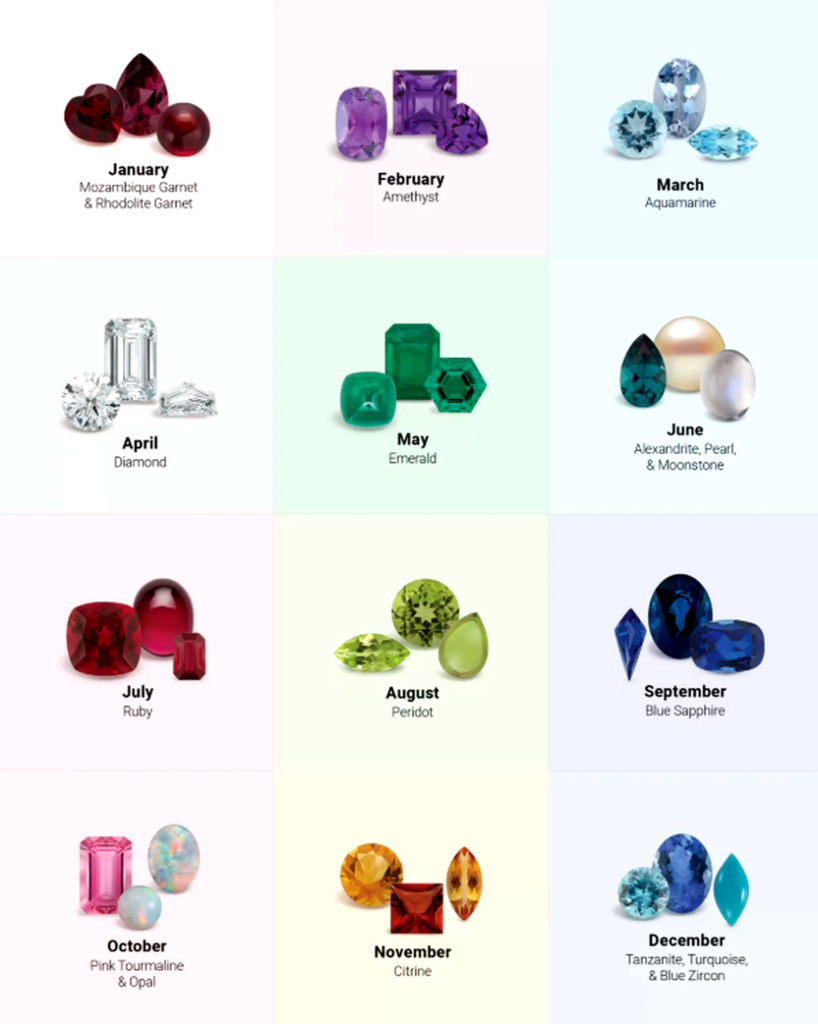
Throughout history, accepted birthstones rotated in and out, with style and availability sometimes determining which stones would reign. In 1912, the National Association of Jewelers in the States standardized the list, which was updated in 1952 by the Jewelry Industry Council of America. Among the changes were the addition of alexandrite to the month of June, citrine to November, pink tourmaline for October (pink was key), replacing alternate lapis with zircon in December, and switching around March’s primary and alternate gemstones of aquamarine and bloodstone. In 2002, tanzanite was added as a December stone.
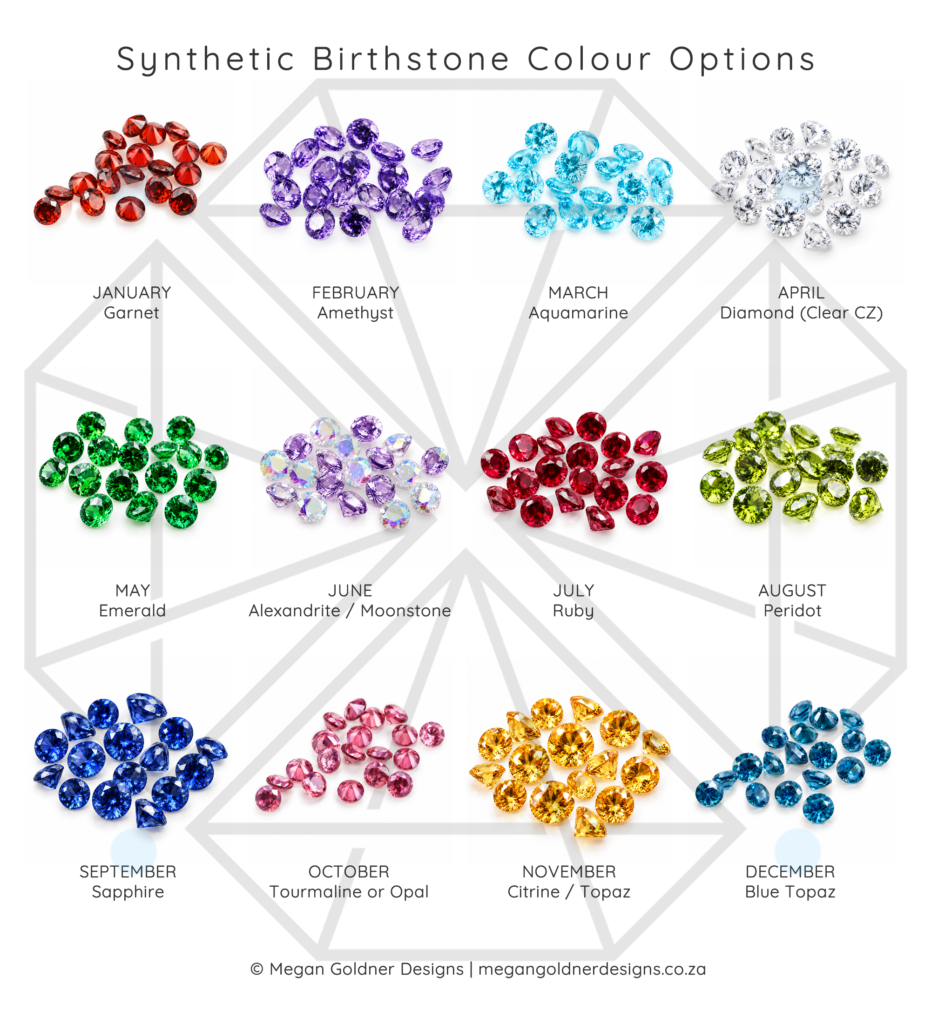
Synthetic Birthstone colour options: