Understanding Resin Ambering, Care and Storage
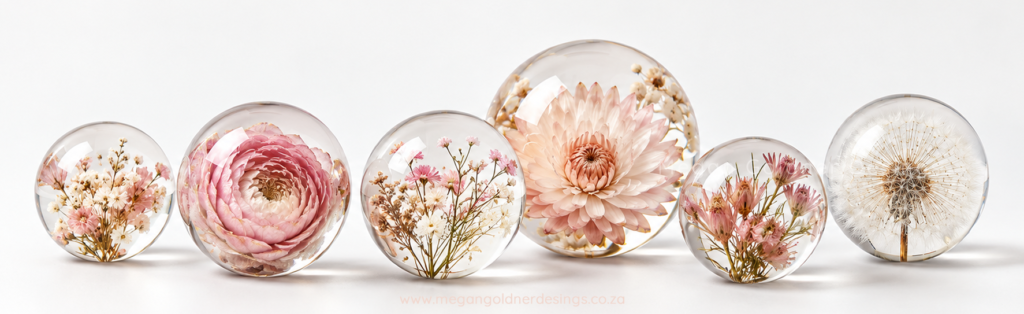
Clear resin is one of the materials I use to preserve cremains, hair and fur, breastmilk, flowers, fabric and other meaningful inclusions in keepsake jewellery.
It is durable, versatile and beautifully clear, but it is not a material that remains completely unchanged forever.
Clear resin ages. Over time, some degree of yellowing, ambering or darkening should be expected.
The quality of the resin, exposure to UV light, heat, chemicals, moisture and the way a piece is stored can all influence how quickly that change becomes noticeable.
Understanding why it happens makes it much easier to care for resin jewellery properly.
What Is Resin exactly?
The word resin covers several different families of synthetic materials, including epoxy, polyurethane, polyester and UV-curing resins. They may look similar when finished, but their chemistry, hardness, clarity and resistance to ageing can be very different.
At Megan Goldner Designs, I use a professional 2-part clear polyurethane casting resin chosen specifically for clarity, durability and UV resistance.
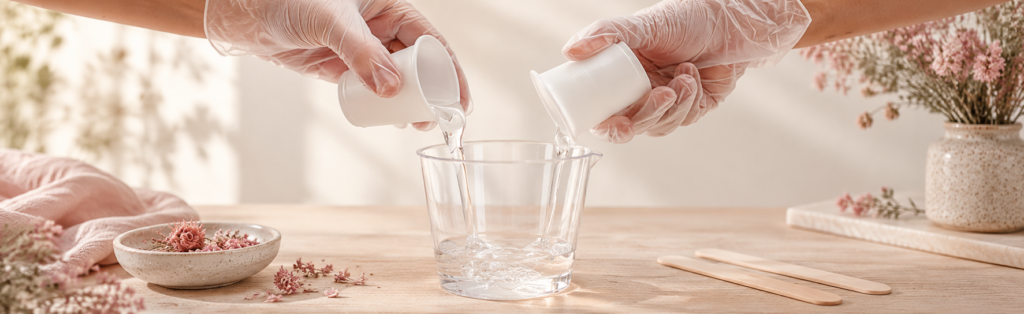
Before curing, the resin consists of 2 reactive components. When they are combined in the correct proportions, a chemical reaction takes place and creates a cross-linked polymer.
In other words, resin does not simply dry like paint. The 2 liquid components react with one another and become a new solid material.
Once cured, it is known as a thermoset polymer.
Why the Type of Resin Matters
Not all clear casting resins perform the same way.
Different formulations vary in clarity, hardness, resistance to scratches, resistance to UV light and the speed at which visible ageing occurs.
A good-quality casting resin intended for clear work will usually contain chemistry designed to improve light stability and reduce the rate of yellowing.
This is an important distinction:
UV resistant does not mean UV proof, and certainly does not mean UV Curing resin (which is a whole different monster)
UV-resistant resin is designed to slow the effects of ultraviolet light. It cannot stop those effects indefinitely. Even technical documentation for professional UV-resistant clear casting resin acknowledges that castings can resist yellowing while still darkening with time.
Why Does Resin Turn Yellow or Amber over time?
The main process behind resin yellowing is ageing of the polymer itself.
UV radiation, oxygen and heat can gradually cause chemical changes within polymers. When UV light contributes to this process, it is often referred to as photo-oxidation.
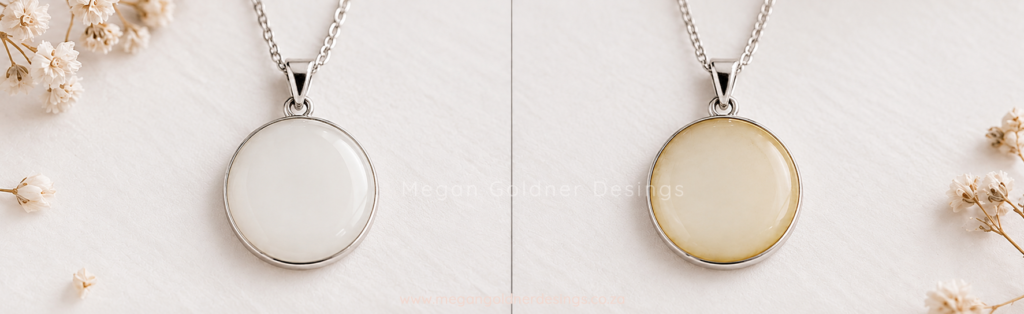
As the molecular structure changes, new chemical groups can form that absorb and reflect light differently. What was originally colourless can therefore begin to look warmer, yellow, amber or darker.
The chemistry and additives used in a polyurethane influence how resistant it is to this degradation, but polyurethane ageing from UV, heat, oxidation, moisture and chemical exposure is well documented.
This is why 2 resin pieces of the same age may not necessarily look the same. One may have spent most of its life in a jewellery box, while another has been worn daily in strong sunlight.
UV Exposure Is One of the Biggest Factors
Sunlight contains ultraviolet radiation, and UV exposure accumulates over time.
Normal everyday exposure does not mean your resin jewellery will suddenly turn yellow after spending an afternoon outside. The concern is repeated and prolonged exposure over months and years.
Leaving a resin piece on a sunny windowsill, wearing it regularly in strong direct sunlight or storing it where it receives UV exposure can accelerate ageing.
The more UV exposure the resin receives, the more opportunity there is for photo-oxidation to occur.
UV Nail Lamps: Please Remove Your Rings
UV and LED nail-curing lamps deserve special attention.
Gel nail systems use ultraviolet radiation to cure the product. Even lamps marketed as LED curing lamps can emit UV radiation. The American Academy of Dermatology specifically describes the ultraviolet exposure produced during gel manicures.
A resin ring placed underneath a nail lamp is being exposed to UV at very close range, repeatedly.
That can accelerate the ageing and yellowing process considerably.
Always remove resin rings before placing your hands beneath a UV or LED nail-curing lamp.
This is one of the easiest sources of unnecessary UV exposure to avoid.
Resin Is Not Completely Impermeable
You will sometimes hear resin described as “porous”.
Technically, a fully cured casting resin is not porous in the same way as untreated wood, fabric or a sponge. However, it is also not an absolutely impermeable barrier.
Water and other small molecules can move into or interact with polyurethane materials over time. Research into polyurethane specifically documents water absorption and transport through the polymer structure, with temperature, humidity and formulation all influencing the process.
For jewellery care, the practical point is simple:
Resin can take up small amounts of moisture and can also absorb or retain some compounds from its surroundings.
This is why repeated exposure to water, perfume, lotions, soap and other products matters.
Perfume, Soap, Lotions and Other Products
Perfume, body lotion, hand cream, hairspray, cosmetics and soap contain far more than water.
They can contain fragrances, oils, alcohols, detergents, solvents and other compounds that may remain on the resin surface or interact with the material over repeated exposure.
Polyurethane materials are capable of absorbing certain volatile organic compounds, although the amount depends strongly on the formulation and the substance involved.
This also explains something I occasionally see with resin jewellery: strong scents can linger.
A piece that is repeatedly covered in perfume, scented hand cream or soap may retain some of that smell even after the surface has been wiped clean.
The best approach is simple. Apply perfume, creams, sunscreen and other skincare products first, allow them to absorb or dry, and put your jewellery on afterwards.
Cigarette Smoke
Cigarette smoke presents another problem for clear resin.
Smoke contains both gases and extremely fine particles. After smoking has stopped, compounds from the smoke can remain deposited on surrounding objects and surfaces. This residue is known as third-hand smoke.
Research has found nicotine and other tobacco-smoke compounds remaining on household surfaces for extended periods, including months or longer.
For resin jewellery, repeated smoke exposure can leave surface deposits that contribute to yellow or brown discolouration and a persistent smoke smell.
That is slightly different from UV yellowing. UV exposure can change the polymer itself, while cigarette smoke may also stain or contaminate the surface.
If you smoke, storing resin jewellery in a closed jewellery box or pouch when it is not being worn can help reduce unnecessary exposure.
Water and Moisture
Resin jewellery should be treated as water resistant, not waterproof.
Research shows that water can penetrate polyurethane materials over time and that moisture can affect their long-term properties.
For jewellery, however, the problem is rarely plain water alone.
A shower introduces heat, shampoo, conditioner and soap.
A swimming pool introduces chlorine and other treatment chemicals.
The sea introduces salt.
Handwashing introduces detergents and often sanitiser afterwards.
Repeated exposure affects not only the resin but potentially the metal setting and the natural material preserved inside it.
For this reason, I recommend removing resin keepsake jewellery before showering, bathing, swimming or washing your hands.
Heat Can Accelerate Ageing
Heat speeds up many chemical reactions, including oxidation and polymer ageing.
This is particularly relevant in South Africa, where a closed vehicle can become extremely hot while also exposing jewellery to strong sunlight.
Avoid storing resin jewellery:
- in a vehicle
- on a sunny windowsill
- beside a heater
- in prolonged direct sunlight
- in very hot or humid environments
Saunas and steam rooms should also be avoided.
Clear and Pale Resin Shows Change More Easily
Yellowing is naturally easier to see in transparent, white and very pale resin.
A slight warm tone that becomes noticeable in a clear or pale breastmilk keepsake may be almost impossible to see in black, navy or strongly pigmented resin.
This does not necessarily mean that pigmented resin is not ageing. The pigment can simply make subtle colour changes less visible.
Natural inclusions may also change independently of the resin.
Flowers can fade or darken. Fabric colours may alter. Organic materials can change gradually with age and light exposure.
Not every visual change in a keepsake therefore comes from the resin itself.
Can Yellowing Be Removed?
It depends on what you are seeing.
Surface residue, dirt and very fine scratches can make resin look dull, cloudy or discoloured. In some cases, professional cleaning, polishing or resurfacing can improve the appearance considerably.
Actual ambering of the resin is different.
If the colour change has occurred within the polymer itself, polishing the surface cannot turn the resin clear again.
This is why prevention and good care matter more than trying to reverse ageing afterwards.
Caring for Resin Keepsake Jewellery
Good care will not prevent resin from ageing forever, but it can significantly reduce unnecessary exposure and help it retain its appearance for longer.
For everyday wear:
- Remove resin jewellery before showering, bathing, swimming and washing your hands.
- Remove it before exercise, cleaning and other activities where it will be exposed to sweat, chemicals or abrasion.
- Remove resin rings before using a UV or LED nail lamp.
- Avoid perfume, hand sanitiser, creams, lotions, hairspray and cleaning chemicals on the resin.
- Avoid prolonged direct sunlight and excessive heat.
- Keep the resin away from acetone, nail polish remover and strong solvents.
- Avoid knocking or scratching the resin against hard surfaces.
- Clean gently when necessary and dry it completely afterwards.
As with any piece containing irreplaceable inclusions, a little prevention is far easier than repairing damage later.
How to Store Resin Jewellery
Where you keep your jewellery when you are not wearing it matters too.
The best storage environment is cool, dry and dark.
Keep resin jewellery in a jewellery box, closed drawer or soft pouch away from direct sunlight.
Store pieces separately where possible. Chains, gemstones and metal edges from other jewellery can scratch a polished resin surface.
Avoid leaving resin jewellery permanently displayed on a dressing table if that area receives sunlight during the day.
Bathrooms are also not ideal for long-term storage because of repeated heat and humidity.
Before storing a piece, make sure it is clean and completely dry.
How Long Will Resin Stay Clear?
There is no single answer.
A high-quality professional resin with good UV resistance can remain attractive for many years, particularly when it is cared for properly.
But I do not describe resin as permanently non-yellowing because that would create an expectation the material cannot honestly meet.
The age of the piece, UV exposure, heat, chemicals, storage conditions, frequency of wear, resin colour and inclusions can all affect how quickly a visible change occurs.
Resin will age. Good resin and good care slow that process. They do not stop it.
That is the expectation I would rather give my clients from the beginning.
Final Thoughts
Resin is a durable material, but it is still a polymer and polymers change with age and environmental exposure.
At Megan Goldner Designs, I use a professional clear casting resin selected for its clarity, durability and UV resistance. Combined with the correct preparation, curing and finishing processes, it gives me the properties I need for keepsake jewellery.
The rest happens once the jewellery leaves my studio.
Avoiding unnecessary UV exposure, chemicals, water, smoke and heat, and storing your jewellery properly when it is not being worn, can make a significant difference to how well your resin keepsake ages.
It won’t stop time.
It will simply give the material the best conditions in which to age well.